







Jonathan Counsell, Hong Piao, Julia Zakel
Advancing the Science and Technology of Materials, Interfaces, and Processing
The mission of the Applied Surface Science Division of the AVS is to provide a forum for research and education in the preparation, characterization, modification, and utilization of surfaces and interfaces in practical applications. The current vision for implementation of the mission statement includes promotion of science and technology relevant to:
- understanding solid/gas, solid/solid, and solid/liquid interfaces of practical importance
- methods for characterizing these interfaces for composition, bonding, topology and structure
- modification of interfaces to optimize the stability, reactivity or other properties of components and/or devices
Officers
Chair
Tanguy Terlier
Email: tanguy_terlier @ avs.org
Chair- Elect
Lyndi E. Strange
Email: lyndi_strange @ avs.org
Secretary
Jean-Paul Barnes
Email: jean-paul_barnes @ avs.org
Treasurer
Peter M. A. Sherwood
Email: peter_sherwood @ avs.org
Past Chair
Samantha Rosenberg
Email: samantha_rosenberg @ avs.org
EC Members-at-Large (2026-2028)
Michael J. Eller
Email: michael_eller @ avs.org
Jonathan Counsell
Email: jonathan_counsell @ avs.org
EC Member-at-Large Early Career (2026-2028)
Melissa Meyerson
Email: melissa_meyerson @ avs.org
EC Members-at-Large (2025-2027)
Jodi Grzeskowiak
Email: jodi_grzeskowiak @ avs.org
Jeff Terry
Email: jeff_terry @ avs.org
EC Members-at-Large Early Career (2025-2027)
Benjamen Reed
Email: benjamen_reed @ avs.org
EC Members-at-Large (2024-2026)
David Morgan
Email: david_morgan @ avs.org
Hong Piao
Email: hong_piao @ avs.org
EC Members-at-Large Early Career (2024-2026)
Lyndi E. Strange
Email: lyndi_strange @ avs.org
A list of past officers can be found here.
The Division Chairs have been
| 1985 | Cedric Powell |
| 1986 | Cedric Powell |
| 1987 | Harland Tompkins |
| 1988 | Richard Colton |
| 1989 | John Grant |
| 1990 | Stephen Gaarenstroom |
| 1991 | Al Czanderna |
| 1992 | Albert Bevolo |
| 1993 | Richard W Hoffman |
| 1994 | Guy Davis |
| 1995 | Anne Testoni |
| 1996 | C. Richard Brundle |
| 1997 | Donald Baer |
| 1998 | Peter Sherwood |
| 1999 | Julia Fulghum |
| 2000 | Joseph Geller |
| 2001 | Robert Opila |
| 2002 | Harland Tompkins |
| 2003 | Bruce Beard |
| 2004 | Fred Stevie |
| 2005 | Anna Belu |
| 2006 | Richard Haasch |
| 2007 | Sarah Asher |
| 2008 | Daniel Gaspar |
| 2009 | Lucille Giannuzzi |
| 2010 | Ian Gilmore |
| 2011 | Vincent Smentkowski |
| 2012 | Amy Walker |
| 2013 | Steven J. Pachuta |
| 2014 | Kathryn G. Lloyd |
| 2015 | Christopher Szakal |
| 2016 | Tony Ohlausen |
| 2017 | Michaeleen Pacholski |
| 2018 | Kateryna Artyushkova |
| 2019 | Karen Gaskell |
| 2020 | Carl Ventrice |
| 2021 | Mark Engelhard |
| 2022 | Gregory L. Fisher |
The Division Treasurers have been:
| 1985 - 1986 | Harland Tompkins |
| 1987 - 1995 | James Solomon |
| 1996 - 1999 | ? Nelson |
| 2000 - present | Peter Sherwood |
The Division Secretaries have been:
| 1985 - 1986 | Harland Tompkins |
| 1987 - 1988 | Stephen Gaarenstroom |
| 1989 - 1995 | Donald Baer |
| 1996 - 1999 | Dave Castner |
| 2000 - 2005 | Alvin Czanderna |
| 2006 - 2008 | Steve Pachuta |
| 2009 - 2020 | Richard T. Haasch |
| 2021 - 2022 | Jordan Lerach |
The Members-At-Large of the ASSD Executive Committee have been:
| 1985 | R. Colton, L. Feldman, S. Gaarenstroom, J. Grant, L. Kazmerski, J.W. Rogers |
| 1986 | R. Colton, L. Feldman, S. Gaarenstroom, J. Grant, L. Kazmerski, J.W. Rogers |
| 1987 | D. Baer, C. Bryson, J. Grant, ? Jones, L. Kazmerski, W. L. Yu |
| 1988 | D. Baer, A. Bevolo, A. Czanderna, R. Frankenthal, L. Kazmerski, M.T. Thomas |
| 1989 | N. Armstrong, A. Bevolo, A. Czanderna, R. Frankenthal, R. Hoffman, G. Korba, P. Lindfors, M. T. Thomas |
| 1990 | N. Armstrong, G. Davis, R. Frankenthal, R. Hoffman, G. Korba, P. Lindfors |
| 1991 | G. Davis, G. Korba, R. Hoffman, G. Nelson, B. Ratner, A. Testoni |
| 1992 | L. Firment, R. Linton, G. Nelson, B. Ratner, A. Testoni, G. Turner |
| 1993 | D. Allara, C.R. Brundle, C. Duke, L. Firment, R. Linton, G. Turner |
| 1994 | D. Allara, C.R. Brundle, C. Duke, J. Geller, J.W. Roger, P. Sherwood |
| 1995 | R. Baird, ? Cirlin, J. Geller, J. W. Rogers, D. Ramaker, P. Sherwood |
| 1996 | B. Beard, R. Baird, ? Cirlin, J. Fulghum, ? Mackay, D. Ramaker |
| 1997 | B. Beard, J. Fulghum, ? Mackay, R. Opila, C. Pantano, D. Simons |
| 1998 | T. Barr, R. Opila, C. Pantano, D. Simons, F. Stevie, H. Tompkins |
| 1999 | T. Barr, L. Feldman, R. Opila, C. Pantano, F. Stevie, H. Tompkins |
| 2000 | A. Belu, L. Feldman, C. Pantano, C. Powell, M. Seah |
| 2001 | S. Asher, B. Rogers, B. Beard, C. Powell, M. Seah, A. Belu |
| 2002 | D. Baer, J. Grant, S. Asher, B. Rogers, B. Beard, C. Powell |
| 2003 | J. Fulghum, R. T. Haasch, D. Baer, J. Grant, s. Asher, B. Rogers |
| 2004 | M. Burrell, I. Gilmore, J. Fulghum, R. T. Haasch, D. Baer, J. Grant |
| 2005 | L. Gamble, K. Lloyd, M. Burrell, I. Gilmore, J. Fulghum, R. T. Haasch |
| 2006 | G. Gillen, J. Shallenberger, L. Gamble, K. Lloyd, M. Burrell, I. Gilmore |
| 2007 | J. Soares, M. Wagner, G. Gillen, J. Shallenberger, L. Gamble, K. Lloyd |
| 2008 | B. Holloway, A. Herrera-Gomez, J. Soares, M. Wagner, G. Gillen, J. Shallenberger |
| 2009 | S. Bryan, A. V. Walker, B. Holloway, A. Herrara-Gomez, J. Soares, M. Wagner |
| 2010 | J. Gardella, C. Szakal, S. Bryan, A. V. Walker, B. Holloway, A. Herrara-Gomez |
| 2011 | A. Herrera-Gomez, J. Gardella, S. Bryan, K. Artyushkova, C. Szakal, J. Ohlhausen |
| 2012 | Stephanie Allen, Lance Lohstreter |
| 2013 | Michaeleen Pacholski, William F. Stickle |
| 2014 | Xia Dong and Carl A. Ventrice, Jr. |
| 2015 | Michaeleen Pacholski, William F. Stickle |
| 2016 | Jeffrey Fenton, Svitlana Pylpenko |
| 2017 | Mark Engelhard, Gregory L. Fisher |
| 2018 | Michael T. Brumbach, Alan M. Spool |
| 2019 | Alex Shard, Christine Mahoney |
| 2020 | Hong Piao, Jonathan Counsell |
| 2021 | Zachary Robinson, Samantha Rosenberg |
| 2022 |
|
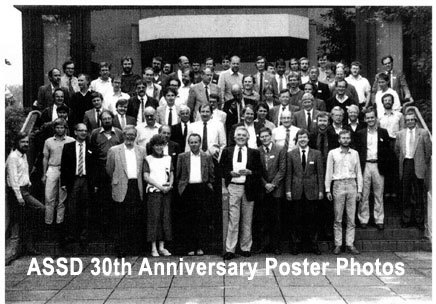
(Click on Picture to launch Photo Album)
The Applied Surface Science Division began operation on November 19, 1985 with Cedric Powell as the first Chair. At this meeting, the appointed Executive Committee developed a set of By-laws for the new Division. The formation of the Division followed a suggestion by the Long Range Planning Committee (LRPC) in 1985 that a new Division be established based upon the technical activities of those active in the E-42 Committee on Surface Analysis of the American Society for Testing and Materials (ASTM). For eight years, the E-42 Committee had sponsored joint technical sessions at AVS symposia, and many members of the Committee were AVS members. The joint sessions at the 1984 Symposium in Reno had been larger than in previous years, and the LRPC foresaw this as a growing field. The By-laws of the new Division were approved by the Board of Directors in December 1985.
The Division grew rapidly, with 400 members in 1988 and 600 members by the end of 1989. The Division is responsible for organization of numerous sessions at the International AVS Symposium and has organized or sponsored several conferences, including the annual "Symposium on Applied Surface Analysis" and the biannual "Topical Conference on Quantitative Surface Science." These two meetings were sponsored by the ASSD starting with the Tenth Symposium held in Lakewood, Colorado in 1988 and the second Topical Conference held in Monterey in 1987. These two conference series continue to be well attended and reflect a broad range of activities by the Division. The Division's web page provides up-to-date information and includes the Mission statement of the Division, i.e.,
"The Mission of the Applied Surface Science Division of the AVS is to provide a forum for research and education in the preparation, characterization, modification, and utilization of surfaces and interfaces in practical applications. The current vision for implementation of the mission statement includes promotion of science and technology relevant to:
understanding solid/gas, solid/solid, and solid/liquid interfaces of practical importance,
methods for characterizing these interfaces for composition, bonding, topology and structure, and
modification of interfaces to optimize the stability, reactivity, or other properties of components and/or devices, through public forums organized by the Division, with other AVS Divisions, or with technical groups outside the AVS."
The Division Chairs have been:
1985 Cedric Powell | 1986 Cedric Powell | 1987 Harland Tompkins |
1988 Richard Colton | 1989 John Grant | 1990 Stephen Gaarenstroom |
1991 Al Czanderna | 1992 Albert Bevolo | 1993 Richard W. Hoffman |
1994 Guy Davis | 1995 Anne Testoni | 1996 C. Richard Brundle |
1997 Donald Baer | 1998 Peter Sherwood | 1999 Julia Fulghum |
2000 Joseph Geller | 2001 Robert Opila | 2002 Harland Tompkins |
2003 Bruce Beard | 2004 Fred Stevie | 2005 Anna Belu |
2006 Richard Haasch | 2007 Sarah Asher | 2008 Daniel Gaspar |
2009 Lucille Giannuzzi | 2010 Ian Gilmore | 2011 Vin Smentkowski |
2012 Amy Walker | 2013 Steven Pachuta | 2014 Kathryn G. Lloyd |
2015 Christopher Szakal | 2016 Tony Ohlhausen | 2017 Michaeleen Pacholski |
2018 Kateryna Artyushkova | 2019 Karen Gaskell | 2020 Carl Ventrice |
2021 Mark Engelhard | 2022 Greg Fisher |
|
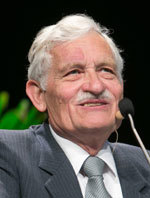 I am a surface scientist, using mainly Auger Electron Spectroscopy (AES) and X-ray Photoelectron Spectroscopy (XPS) for research and problem solving. I started my work in Australia where I obtained my degrees, then spent two years in basic research in the USA followed by two years in industrial research and development in The Netherlands, before returning permanently to the USA. In the early days we built our own electron energy analyzer (a double-pass cylindrical mirror analyzer) for AES and it worked very well. The late 1960s and early 1970s were exciting times for AES where we were discovering many things about it, including the establishment of an atlas of Auger spectra of the elements, assigning transitions to observed peaks, understanding chemical effects on spectra (both energy shifts and lineshape changes), and even the production of Auger spectra using low energy ions that were typically used for sputter depth profiling. The Auger spectra from ions were quite different from those produced by electrons, and it took me some months to work out why they were so different. I began using XPS in the early 1970s although the first commercial equipment that I used was not suitable for the task (to study pure Ti and its oxides) due to its poor vacuum. The company that made that instrument soon quit the field! For most of my career, I worked with one or two colleagues in a research laboratory. I have worked with all kinds of materials, including metals, semiconductors, ceramics, polymers and nanomaterials. I really enjoyed my work and loved to receive challenging problems. I retired from full-time work in 2014, and now work part time as a surface analysis consultant.
I attended my first AVS Symposium (the 16th National Symposium) in Seattle in 1969 where I had the honor of giving the first contributed talk in the first session of the newly formed Surface Science Division. My talk was on “Auger Studies of (111) Silicon Surfaces” where there was controversy over the origin of its 7x7 surface structure. I built an in-situ device for cleaving Si and for later annealing the cleaved surface to obtain the 7x7 structure, and by comparing the Auger spectra I concluded that the 7x7 structure was not impurity based as had been proposed by others.
I was also active in the E-42 Committee on Surface Analysis of the American Society for Testing and Materials (ASTM), serving as Chair of the AES subcommittee from 1980 to 1993. The E-42 Committee had sponsored joint technical sessions at AVS symposia for several years, and was instrumental in the formation of the AVS Applied Surface Science Division in 1985. I helped establish its Student Award and was its committee’s first Chair with the first award being given in 1987. I chaired the ASSD in 1989, and I was honored to be named an AVS Fellow in 1994. I was also honored to receive the AVS Albert Nerken Award in 2000 “For pioneering research and development of the technique of Auger Electron Spectroscopy to study surface composition and chemistry."
Walt Haas and I established the annual Symposium on Applied Surface Analysis at the University of Dayton in 1979. It was established to provide a forum where applied work could be presented and discussed. There was a need for this as most conferences allowed only basic research work to be presented. Soon after the AVS ASSD was formed I suggested that they should organize the Symposium in the future. They agreed, and the Symposium series continues today. It is also an ideal place for new surface analysts to meet their peers as there are no parallel sessions.
I started teaching short courses on surface analysis for the AVS in 1985 and continued that through 2006. After that, I started my own, more comprehensive, 5-day short course series that I still enjoy teaching once per year. I also teach short courses on behalf of the International Union for Vacuum Science, Technique and Applications (IUVSTA) of which AVS is a member society. I really enjoy passing my knowledge on to the next generation of surface scientists and I get great satisfaction when an attendee says “Now I understand that!”
I served on the IUVSTA’s ASSD committee for many years representing the AVS, and was the committee Chair from 1998-2001. Later, I served as IUVSTA Treasurer from 2004-2010. I was honored to receive the IUVTA Prize for Technology in 2013.
I have been involved in journal editing for a long time and served as North American Editor of Surface and Interface Analysis from 1986-2015. I also co-edited a book with Dave Briggs in 2003 entitled “Surface Analysis by Auger and X-ray Photoelectron Spectroscopy.”
On a personal note, I love to hike and travel, and to spend time with my family.
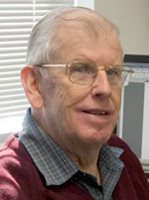 I officially retired from NIST in 2006 but continued to work there as a Scientist Emeritus on a part-time basis. Much of my career has been summarized in the historical interview I had with Paul Holloway in 2007. I now provide some updates.
NIST databases for applications in AES and XPS continue to be popular. With the cooperation of Wolfgang Werner and other colleagues in Vienna, improved versions of the NIST Database for the Simulation of Electron Spectra for Surface Analysis (SESSA) have been developed. AES and XPS spectra can now be simulated for nanostructures such as islands, lines, spheres, and layered spheres on surfaces as well as for multilayer films. A new database was developed with Alex Jablonski in Warsaw to provide backscattering correction factors for AES, and another database was developed with Francesc Salvat in Barcelona and Alex Jablonski to give inner-shell ionization cross sections by electron impact. Finally, a new web-accessible version of the NIST Electron Elastic-Scattering Cross-Section Database has been developed with Alex Jablonski. While my main motivation for the development of NIST databases was to improve the availability of data needed for quantitative applications of AES and XPS, some are also of value for other applications.
I have continued my collaboration with Shigeo Tanuma in Tsukuba and David Penn (now also retired from NIST) on the calculation of electron inelastic mean free paths (IMFPs) in many materials. This work started when Shigeo came to NIST on a two-year assignment in 1986 during which we became aware of a powerful algorithm for IMFP calculations that had then just been developed by David. We were able to make these calculations for many elemental solids, inorganic compounds, and organic compounds and to develop a predictive IMFP formula for other materials. Our original focus was on “conventional” AES and XPS, with electron energies between 50 eV and 2 keV, but we expanded the energy range first to 30 keV (for applications in “hard” XPS or HAXPES) and then to 200 keV (for applications in transmission electron microscopy). I continue to have successful collaborations with Alex Jablonski on analyses of elastic-scattering effects in AES and XPS and with Wolfgang Werner on various applications of SESSA. I have also enjoyed collaborations with NIST scientists and with others.
I am very grateful for the opportunities I have had at NIST to develop my scientific career and to interact with many colleagues of different backgrounds. I have also been fortunate in being able to travel to national and international conferences and to serve many different types of professional organizations. I have been an AVS member for 45 years, and I particularly value my association with the Applied Surface Science Division which has been my professional “home” for 32 years. I have been pleased to see it grow and prosper, and particularly to see an influx of younger members.
During my retirement years, my wife and I have had the opportunity to travel to the Galapagos Islands, Costa Rica, China, Japan, Korea, Norway, Russia, France, Italy, Greece, Turkey, and Australia as well as to Alaska, Arizona, Oregon, Washington state, and Puerto Rico. We have enjoyed the scenic wonders of the US and many countries as well as seeing a wide variety of wildlife.
It would have been impossible to predict when I was a graduate student in Perth, Australia that I would have a 55-year career at NBS/NIST and that I would have such a rewarding life. I feel very fortunate. I would finally like to repeat the advice I received from the Principal of my elementary school: “Hitch your wagon to a star!
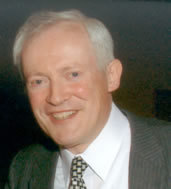 I am an Emeritus faculty member at two universities, a University Distinguished Professor Emeritus of Chemistry at Kansas State University and a Regents Professor Emeritus of Physics and Dean Emeritus at Oklahoma State University. I retired at the end of July 2012 after 42 years as a faculty member at four universities, 14 years in the UK and 28 years in the USA. I now live north of Bellingham, Washington – a beautiful area surrounded by mountains, ocean and islands. After retirement I moved my equipment to the Pacific Northwest, with instruments at the University of Washington and at Western Washington University. I am an Affiliate Professor of Chemistry at the University of Washington and a faculty member at Western Washington University. I go into the laboratory from time to time working with faculty and students as well as other research activities including working on updating my data analysis software which has been developed over the past 40 years. My research program has been concerned with surface analysis (especially X-ray photoelectron spectroscopy) of materials with particular interest in electrode surfaces, corrosion systems, and carbon fiber and composite surfaces. The work is an example of how basic chemistry can be applied to analyze and understand important practical problems, many of which have a direct relevance to industry.
I was born in England and received my first degree at St. Andrews University in Scotland, and my other degrees at the University of Cambridge where I had my first faculty position. I left Cambridge when I was given the chance to start a surface science laboratory at Newcastle University in 1972. I moved my equipment and my research group to Kansas State University in 1985 moving much of it in 135 tea chests (yes the same size as those involved in the Boston Tea Party). I moved to Oklahoma State University in 2004 again moving my equipment and research group. As Dean of the College of Arts and Sciences I had less time to be in the laboratory, but continued my research with my last Ph.D. student finishing in June 2012. Moving my equipment to the Pacific Northwest was quite an adventure, 2300 miles in an air ride 53 foot semi.
My research was funded by various entities including the U.K. Science Research Council, the U.K. Ministry of Defense and in the U.S. by the National Science Foundation, the Air Force Office of Scientific Research, and NASA as well as by a number of industries.
During my time as a faculty member I had a significant amount of administration. I was Secretary of the Governing Body at Downing College, Cambridge, and I was Chair of the Board of Studies in Physical Sciences for the Cambridge Institute of Education. I was a Program Officer at the National Science Foundation (1990-1991), Head of the Chemistry Department at Kansas State University as well as my 8 years as Dean of Arts and Sciences at Oklahoma State University. I was also the Principal Investigator on large multi-investigator EPSCoR grants from the National Science Foundation and NASA. I also served as the founding State of Kansas DEPSCoR Director. A very enjoyable activity was serving on the Rhodes Scholarship Selection Committee for the State of Kansas for 6 years – some very impressive students came to these interviews.
I have been very much involved in Society activities. I was Secretary of my local section of the Royal Society of Chemistry, and I was one of the early members of the U.K. ESCA Users Group until I left the UK in 1985. I became involved in the Applied Surface Science Division of AVS in 1990, serving on the Executive Committee since 1993, serving as Vice Chair in 1997, Chair in 1998 and Program Chair in 1999. I started as Treasurer in 1999 and have continued in that role since then. I also served on the AVS Board of Directors from 1999-2000 and served as the Program Chair for Surface Analysis 2002.
Retirement turns out to be quite busy. In addition to my research activities, I have a number of activities in the community including serving as President and Treasurer of my Homeowners Association. My wife Norma and I enjoy travel both in the beautiful Pacific Northwest as well as abroad.
It has been a pleasure and honor to serve ASSD for many years and a delight to see how it continues to thrive.
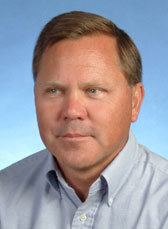 I am a surface chemist/analyst and I have been working in the characterization organization at the General Electric Global Research Center (GE-GRC) in Niskayuna, NY since 1997. For the past 9 years, my emphasis has been on ToF-SIMS analysis. In 2010 I spent a significant amount of time using ToF-SIMS to analyze solar materials. ToF-SIMS has also proven to be a very valuable technique for MEMS, sensing, polymeric, biomedical, x-ray detector, battery, and alloy samples. I routinely find unexpected species/contaminants in the samples I analyze by ToF-SIMS. An important aspect of my work involves the use of multivariate statistical analysis (MVSA) tools in order to perform a rapid, unbiased, and complete analysis of the full ToF-SIMS data sets. MVSA algorithms allow for the identification of species association in complex multiphase materials. In addition to ToF-SIMS, I am also constructing a high temperature desorption apparatus. I am also working with external laboratories in order to evaluate advanced microstructural characterization techniques such as Atom Probe Tomography and Helium Ion Microscopy and show the benefits these techniques have for GE materials. When I first arrived at GE, I performed AES, XPS, SEM, and EBSD analysis while making the case to purchase our first ToF-SIMS instrument. At GE, I have also designed novel instrumentation/protocol to support various GE businesses. Since I work in an industrial characterization laboratory, I can not say much about the GE materials, however I am able to talk about, publish, and present novel data analysis protocol. I have co-authored 77 external papers, 75 internal GE reports and I hold 6 US patents. I have also presented numerous contributed and invited talks. In 2010 I was named a fellow of AVS for "For exceptional contributions in the field of industrial surface analysis, including multivariate statistical analysis of ToF-SIMS data".
Before arriving at GE, I held a post-doc position at Argonne National Laboratories where I was part of a team that designed and built ion scattering instrumentation in order to perform in-situ, real-time, surface analysis of thin films during deposition at mTorr pressures; a project which resulted in a 1997 R&D100 Award. I obtained my Ph.D. in physical chemistry under the guidance of Prof. John T. Yates, Jr., the title of my thesis was "Surface Science Investigation of Tribologically Important Systems - Iron and Diamond".
I have been a member of AVS since graduate school. During my early career, I associated myself mostly with the Surface Science Division and the Vacuum Science Divisions, however as my work started to become more applied, I rapidly became more involved in the Applied Surface Science Division (ASSD). The diversity of topics covered by AVS enables transitions between divisions. I know many people that are associated with multiple divisions.
An important aspect of ASSD is that the community works as a team to help each other. People working as an analyst in an industrial setting do not have many (if any) colleagues which know as much about an analytical technique as they do. For new hires, especially for those starting right out of school, this is a drastic change since in an academic setting they have many colleagues they can talk to about a technique including their research advisor. Being involved in ASSD increases the number of people who understand techniques - and you can "bounce" ideas off of them. The AVS annual symposium and exhibition is a key part of my professional development. The meeting gives me an opportunity to have candid discussions with others working in various fields of science and technology. Many of my successful scientific collaborations (including the collaboration I have in place with Sandia National Laboratories in order to perform MVSA of ToF-SIMS data sets) originated from discussions at past AVS International Symposia.
I am the 2011 chair of the ASSD and I am a co-chair of the upcoming Surface Analysis 2011 meeting which will take place in Albany NY April 11-13, 2011. I also served as the founding chair of the Hudson Mohawk Chapter of AVS (2009-2010). I have also been a co-chair of the past 3 bi-annual surface symposia at the annual Microscopy and Microanalysis meetings (2006, 2008, and 2010).
Many AVS researchers mentored me during my professional development, I encourage everyone (especially students and post-docs that are entering the workplace) to seek a senior AVS member which can serve as your mentor. I look forward to serving as the ASSD chair in 2011 and continuing to mentor the next generation of AVS'ers.
Outside of work, I enjoy custom woodworking, spending time outdoors, and vacationing with my family. I have two daughters ages 6 and 10 - both are figure skaters hence my wife and I spend 4 or more nights a week at local ice skating rinks. Over the past few years, I have been learning the science behind figure skate sharpening and last year I purchased equipment to sharpen figure skates and was trained in the use of the equipment. I now sharpen a few pair of skates/week. In 2011, I will be chairing the Albany Figure Skating Club's USFS Competition.
Sincerely,
Vincent Smentkowski
Surface Analyst/Chemist
Chemical Technologies & Materials Characterization
T +1 518 387 5467
smentkow@ge.com
www.edisonsdesk.com
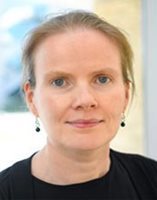 I am an Associate Professor of Materials Science and Engineering at the University of Texas at Dallas. The ultimate goal of my group’s research is the development of simple, robust materials for constructing complex two- and three-dimensional surfaces by manipulating interfacial chemistry. These structures have applications in organic electronics, sensing, catalysis, photovoltaics and optoelectronics. Our current efforts focus on the formation and patterning of molecular thin films (self-assembled monolayers, SAMs) and the reactions of patterned films with metals, semiconductors and biomolecules, as well as the development of analytical techniques for probing the structures produced. My group employs surface science techniques, in particular time-of-flight secondary ion mass spectrometry (TOF SIMS) and reflection absorption infrared spectroscopy (RAIRS) and calculations of molecular structure (density functional theory, DFT) in this work.
However, rather than tell you about my group’s research I thought I’d tell you about all the activities that a professor gets up to (and your graduate advisor never told you!). A professor’s job has three components to it which are often called research, teaching and service. At a research university (like mine) a professor runs a research group. This involves mentoring graduate and undergraduate students as well as post docs, raising the grant/contract money to run the group (we have to pay your stipends!), direct the research, write papers, etc. Each semester I teach one 3 credit hour class, which includes preparing the curriculum, writing the classes, setting homework and exams, and at the end of the semester evaluating the class. However, teaching also involves one-on-one teaching in the lab (informally), developing new curricula and/or classes, and a variety of other activities. Service is perhaps the least well-known part of being a faculty member. A university and its department are run by a large number of faculty committees. For example in my department, I’m part of the graduate admissions and recruitment committee, the curriculum oversight committee and graduate qualifying exam committee. At a university level I’m involved in the selecting and mentoring scholars for the McDermott scholarship program (a prestigious scholarship at University of Texas at Dallas), on a graduate scholarship committee, and a peer mentor to a junior faculty member. I’m also active in professional societies, in particular the AVS, and this year I’m the chair of this division (please email me if you have comments or concerns or you’d like to get involved!).
Just to give you an idea of what my week can be like, here’s my diary for last week:
Monday: My graduate students in “MSEN5360: Materials Characterization” have an exam tomorrow so I spent the morning working with students who have questions about the material. I also had to finish making the exam key and review a paper for Analytical Chemistry. Refereeing of papers is an important task as it’s important to give constructive feedback.
Tuesday: 8.30 am: It’s exam time(!) Thankfully only two students were late – Dallas traffic can be appalling in the morning. After the exam, I started grading and graded through lunch. At 2pm I went a joint group meeting with my collaborator, Manuel Quevedo, and his students. Straight afterwards I went to the investiture of several colleagues as Chaired Professors (the highest honors the University gives). It’s nice to see them being honored but it got kind of long as 19 professors were honored. Straight after that it was off to my group meeting where one of my undergraduates presented her work for the first time.
Wednesday: Off to St. Louis for the day to chair the PhD Defense of my student, Jen Dertinger. I was an assistant professor at Washington University in St. Louis before I moved to the University of Texas at Dallas, and several students remained as PhD students at Washington University in St. Louis. It was very odd to be back. After Jen’s successful defense, it was back off to the airport to return to Dallas.
Thursday: Taught “Materials Characterization” today – returned the graded mid-term exams and started the discussion of optical and electron microscopy. After class, I went to the Departmental Colloquium given by Prof. Weidong Zhou from University of Texas at Arlington. From about noon to 2pm I also met individually with the students in my group, so we could discuss their research that they’d been doing. Afterwards I met with the colloquium speaker. Then I got in the car and was back off to the airport to fly to San Antonio.
Friday: Went to a day-long meeting with colleagues from University of Texas campuses at Dallas, San Antonio, Arlington, Brownsville, Pan American, Permian Basin and Tyler, and Texas Southern University. The purpose of this meeting was to plan strategies for recruiting and retaining students from under-represented groups to MS and PhD programs, and then preparing them for academic careers.
I hope that I have shown you that a professor’s job can be very varied – it really is what you make it! I’m happy to answer any questions that you may have – there’s so many different types of “faculty careers”.
Best Wishes,
Amy Walker
Department of Materials Science and Engineering,
University of Texas at Dallas,
Email: amy.walker@utdallas.edu
Ph: 972 883 5780
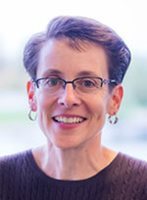 How are you involved with surface science?
I am a surface scientist in the medical device industry, as I have worked at Medtronic for the past 16 years. I lead the Microscopy and Surface Analysis team based in Corporate Science and Technology in Minneapolis MN. My team has an excellent portfolio of tools available for understanding the chemistry and morphology of surfaces and interfaces of medical devices, including TOF-SIMS, XPS, profilometry, ellipsometry, SEM, Dualbeam, XRD, Raman, and IR. Our expertise helps bring a fundamental understanding of materials properties in all phases of product development from designing of new devices, to manufacturing, through to resolving issues in final product. We frequently help evaluate coatings and surface treatments, determine extent of cleanliness, investigate adhesion issues, identify foreign material, and lead failure analysis investigations.
Why is surface science interesting?
My team works with scientists and engineers around the world in all of Medtronic businesses. It is exciting to see the latest technologies and know that they will have an impact in improving the quality of life for so many people. We work with many devices including catheters, stents, drug delivery systems, implantable electrical stimulation devices and leads, and tools for cutting and sealing tissue. A typical day finds us analyzing devices, researching information about materials, processes and methods, interpreting data, writing reports, and constantly communicating with our many Medtronic requestors by email, phone, WebEx, and instant messaging. The variety of work and the fast pace keeps us invigorated. In our industry quality is critical as every device must function properly, so we understand our work is important. We also work in a greater group of materials scientists and collaborate closely with those who have expertise in biocompatibility, polymers, thin films, electronics, electrochemistry, mechanics, and modeling.
Is surface science the only thing you do?
Within Medtronic I have additional leadership responsibilities. Currently I am Chair of the Analytical Lab Council. This organization serves to facilitate communication and collaboration among more than 25 analytical labs across Medtronic globally. We aim to gain efficiencies by identifying best practices in quality, lab information systems, chemical characterization, and sourcing. I also help our Corporate R&D group keep on top of the work going on in all of Medtronic’s businesses. I serve as liaison to one business, the Coronary and Structural Heart business headquartered in Santa Rosa CA and with Medtronic sites located in Santa Ana CA, Redwood City CA, Minneapolis MN, Danvers MA, and Galway Ireland. My role is to communicate with the R&D leaders and employees, keep abreast of technical developments for new devices and therapies with the business, and facilitate finding resources for critical issues.
How do you keep up with the latest developments in surface science?
Outside of Medtronic I try to stay involved with technical organizations and collaborate with academic and government sponsored institutions. I have found that taking on leadership roles with organizations is an easy way to stay abreast of technical developments, as well as a chance to give back to the communities that have fostered my own development. I served on the Board of the National ESCA and Surface Analysis Center for Biomedical Problems at the University of Washington as well as the Characterization Facility at the University of Minnesota. I also have helped organize conferences and symposia locally, nationally and internationally, as well as attend and present at them myself. It takes extra time but colleagues and knowledge gained make it worthwhile.
I also spent the past four years as Editor of the journal Biointerphases. The exciting part of being Editor is seeing manuscripts that demonstrate scientific advances before anyone else does! The role has the responsibility to further understanding of the biointerface by emphasizing quantitative characterization and modelling, which can be very rewarding.
Why do you participate in AVS activities?
With its emphasis on the science and technology of materials, interfaces, and processes, AVS has always been the best resource for technical knowledge in my field. The highly interdisciplinary nature of the organization, especially the applied surface science and biomaterial interfaces aspects, as well as the international participation make AVS very worthwhile. I attended my first AVS Symposium in graduate school in 1992 and have been involved ever since, which has led to many friends, colleagues, and collaborators. I value that through AVS I can find the standards that define how surface science should be done (and the experts that created the standards!) as well as learn of the latest developments, tools, and applications.
I started volunteering through AVS to meet people with similar technical interests and to give back in areas that had benefitted me early in my career. After my post-doc I moved to Minnesota, joined the Minnesota chapter of AVS, and eventually became a Board Member and Chair. With national AVS, I have served on the Executive Committee of the Biomaterial Interfaces Division (BID) and the Applied Surface Science Division (ASSD), as well as Chair of ASSD. Through these roles I gained leadership skills that have helped me grow in my career from independent contributor to organizational influencer and leader. More recently I served as a Director of AVS, and I am currently a Trustee. In 2017 I was honored to be named Fellow of AVS.
AVS is the technical society with the most consecutive annual 5K runs. As a grad student the AVS 5K was the first time I ever received an award for my age group in a race. Looking back, I think the organizer adjusted the age groups so that everyone was a winner, but it made me feel like a hero and inspired me as a runner since then!
How did you get to your current role?
I grew up in Ohio and obtained a B.S. in chemistry from Denison University in Ohio. My Ph.D. is in analytical chemistry with a focus on surface science from the University of North Carolina. I did postdoctoral work at the University of Washington in the Department of Bioengineering. I was a Staff Scientist at Physical Electronics for four years as a TOF-SIMS applications scientist where I had the opportunity to travel to many countries to provide training and technical consultation. Upon joining Medtronic in 2001, I was active in Medtronic’s Technical Forum which promotes knowledge sharing, fosters professional development, and rewards technical innovation. I served as Chair for the organization with 5000 technical participants. Over time I gained confidence in my skills in helping, connecting, and collaborating with others, and my strengths with strategy, organization, and execution. As a result of being involved across Medtronic’s businesses as well as representing Medtronic externally, I was elected to Medtronic’s two honorary technical organizations, the Technical Fellows and the Bakken Society.
Do you have time for hobbies?
My family is my love and I spend every spare moment with my two daughters (ages 9 and 12), husband, and dog. Together we spend time hiking, skiing, and volunteering in the community. I enjoy running, and frequently bike to work. It’s not often that equal time spent is between work and personal activities, but small moments in a day add up to much satisfaction!
The AVS Applied Surface Science Division (ASSD) Peter M. A. Sherwood Mid-Career Professional Award recognizes achievements leading to exceptional progress in research and development made by professionals in their mid-career in an area of interest to the ASSD.
For more information and recent winners, click here
The AVS Applied Surface Science Division (ASSD) is is offering student awards.
For more information and recent winners, click here
Current AVS-ASSD Sponsors:
 |
 |
 |
 |
Past AVS-ASSD Sponsors (Since 2010):
 |
 |