





Advancing the Science and Technology of Materials, Interfaces, and Processing
Our interests lie in both theoretical and experimental studies in the following areas:
- Chemical reactions on surfaces (adsorption, desorption, catalysis, etching, oxidation and passivation, etc.)
- Surface spectroscopies using ions, electrons or photons
- Growth and physical structure of surfaces and interfaces
- Electronic structure of surfaces and interfaces
Our tradition and culture are rooted primarily in studies of atomically-clean and well-characterized surfaces in ultra-high vacuum, and our part of the annual AVS International Symposium remains a prime venue for presenting such work. However, we are happy to include surface- and interface-related research done in low-vacuum or "no-vacuum" environments such as liquids. Our past focus has been mainly on metals, semiconductors and oxides. We are also very much interested in organic, nano- and bio-materials as well as in other novel materials of technological importance.
Officers
Chair
Nan Jiang
email: nan_jiang @ avs.org
Program Chair (2026) / Chair (2027)
Dario Stacchiola
email: dario_stacchiola @ avs.org
Program Chair-Elect (2026) / Program Chair (2027) / Chair (2028)
Abner Di Siervo
email: abner_siervo @ avs.org
Secretary/Treasurer
Dan Killelea
email: dan_killelea @ avs.org
Past-Chair
Florencia Calaza
email: florencia_calaza @ avs.org
Executive Members
Liney Arnadottir (2026-2027)
email: liney_arnadottir @ avs.org
Nathan P. Guisinger (2026-2027)
email: nathan_guisinger @ avs.org
Joerg Libuda (2026-2027)
email: joerg_libuda @ avs.org
Jason Weaver (2026-2027)
email: jason_weaver @ avs.org
Manos Mavrikakis (2025-2026)
email: manos_mavrikakis @ avs.org
Tim Schaefer (2025-2026)
email: tim_schaefer @ avs.org
M. Veronica Ganduglia-Pirovano (2025-2026)
email: veronica_ganduglia-pirovano @ avs.org
| Surface Explorer Aid to creating images of surfaces By : Klaus Hermann |
Surface Science Study Material for students By : Roger Nix |
| http://surfexp.fhi-berlin.mpg.de/ | https://chem.libretexts.org/Bookshelves/Physical_ and_Theoretical_Chemistry_Textbook_ Maps/Book%3A_Surface_Science_(Nix) |
 |
 |
| Atoms and Molecules at Surfaces Study Material for students By : Philip Moriarty |
Surface Science: Methods of Surface Analysis Study material for students By: EdX / MEPhIx |
| https://www.nottingham.ac.uk/ ~ppzpjm/amshome.htm |
https://www.edx.org/course/surface-science-methods-of-surface-analysis |
 |
 |
| Surface Science Reading material for students By: Wikipedia |
|
| https://en.wikipedia.org/wiki/Surface_science | |
 |
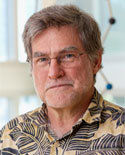 I am a physical chemist who started in gas-phase spectroscopy and reaction dynamics (B.A. from Rice University with Phil Brooks, Ph.D. from Berkeley with Y.T. Lee, postdoc with Dick Zare at Stanford). I joined the chemistry faculty at SUNY Stony Brook in 1983, studying gas-phase reactions of state-selected ions and of metal/metalloid clusters, then moved to University of Utah in 1995, where I am currently a Distinguished Professor and Henry Eyring Presidential Endowed Chair in Chemistry.
As part of the move, I switched my research from gas-phase to surface chemistry which I knew practically nothing about, and AVS became important to me as a venue to learn about everything surface- and UHV-related, and to meet colleagues and make friends. I hope that being on the executive committee will give me opportunities to help other newbies in the surface science field.
I currently focus on two areas of nanoparticle surface chemistry: 1. Catalysis and electrocatalysis by size-selected clusters deposited on surfaces in UHV. 2. Surface chemistry of individual nanoparticles, using a new single-particle trapping method. We focus on understanding cluster size effects on catalysis, the effects of nanoparticle structure on surface chemistry, and development of the single-particle trapping method as a tool for chemistry at ultra-high temperatures (>3000 K), where conventional surface science is difficult.
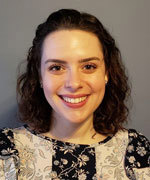 My name is Rachael Farber, and I am currently a postdoctoral scholar at The University of Chicago in Prof. Steven Sibener's group. I was not aware of surface science as a field until graduate school where I met Prof. Dan Killelea at Loyola University Chicago.
Dan's work investigating the chemical and structural consequences of highly oxidized catalytic metal surfaces is what drew my attention to surface science, and I was particularly interested in the low temperature scanning tunneling microscopy (LT-STM) experiments he planned to do. I then joined Dan's group as a graduate student, and ultimately received my PhD from Loyola University Chicago in 2018 where I used a combination of surface science techniques to study highly oxidized Rh(111).
For my postdoctoral work, I decided to stay in the field of surface science, but switched from studying catalytic metal surfaces to metal surfaces important to particle accelerator science and technology. Current particle accelerator facilities use niobium (Nb) superconducting radio frequency (SRF) cavities. Nb SRF cavity performance is, however, easily attenuated by the presence of hydrogen in the cavity bulk. This hydrogen, which precipitates out as Nb-hydrides at operating temperatures, ultimately causes SRF cavity failure and decreased performance of particle accelerator facilities. In an effort to overcome the performance limitations introduced by hydrogen, we have worked with the Center for Bright Beams (CBB), an NSF Science & Technology Center, to investigate the initial, nano-scale growth and suppression behavior of Nb-nano hydrides on Nb(100).
Our next project, also done in collaboration with the CBB, will focus on elucidating Sn diffusion and incorporation on Nb(100) to inform growth procedures of Nb3Sn SRF cavities, the next generation material for SRF cavities. I have been attending the AVS International Symposium & Exhibition since 2015 as a graduate student, and have continued attending through to this past year's meeting in 2019 as a postdoctoral scholar.
The active surface science community, leadership opportunities for graduate students and postdoctoral scholars, and opportunity for professional networking and scientific collaborations are some of the driving forces for my continued attendance since 2015. Looking forward, I am excited to continue attending these meetings and being involved with AVS as I continue my independent career!
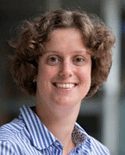 My name is Irene Groot and I am associate professor (tenured) at the Leiden Institute of Chemistry in the Netherlands. I am leading a group focusing on investigating heterogeneously catalyzed reactions on model catalysts using operando/in situ microscopy and spectroscopy. Currently, my group consists of 6 PhD students and 4 postdocs.
I studied chemistry in Leiden, however, with a focus on physics. I graduated in molecular astrophysics. During my Master's research projects I got involved in ultrahigh vacuum and surface science and was immediately hooked. Even though the topics that I investigate using surface science have changed from astrophysics and dynamics at surfaces to heterogeneous catalysis, the underlying methods are still the same: complex ultrahigh vacuum equipment, that I partially develop myself, and atomic-scale investigation of surfaces.
At the moment, my research focuses on the atomic-scale understanding of heterogeneous catalysis by investigating the chemical reaction and the accompanying changes to the catalyst surface while it happens. Thereto we make use of dedicated home-developed microscopy and spectroscopy tools that combine an ultrahigh vacuum environment for model catalyst preparation and characterization with new high-pressure surface science techniques such as scanning probe microscopy, optical microscopy, and spectroscopy. Examples of chemical reactions we study are CO oxidation, NO reduction, Fischer-Tropsch synthesis, hydrodesulfurization and graphene growth on liquid copper. The ultimate aim of this research is to obtain a full, atomic-scale understanding of catalysis, so that new catalysts can be developed by design instead of via trial-and-error.
I have visited two AVS meetings in the past 5 years. These meetings are a very good platform to meet colleagues in the field, discuss new results and challenges, and to present my work to a specialized audience.
 I am Dan Killelea, Associate Professor in Chemistry at Loyola University Chicago.
I am originally from Milwaukee, WI. I have a BS in Chemistry from the University of Wisconsin – Milwaukee, a PhD in Chemistry from Tufts University in Medford, MA, and moved to Chicago in 2007 to do a postdoc at The University of Chicago. I have been at Loyola since 2011.
Despite the parting advice from my undergraduate research advisor (“Stay away from the Physical Chemist”), I joined Art Utz’s lab as a graduate student to study gas-surface reaction dynamics. This was my introduction to Surface Science. I am still fascinated by reactions on metal surfaces, and I have found AVS to be the optimal community for sharing and discussing results from my group and learning about the progress of others. My group is presently studying the electronic and geometric changes of metal surfaces under highly oxidizing conditions and the effects of such changes on surface chemistry relevant to heterogeneous catalysis.
(Click on Pictures to launch individual Photo Albums)
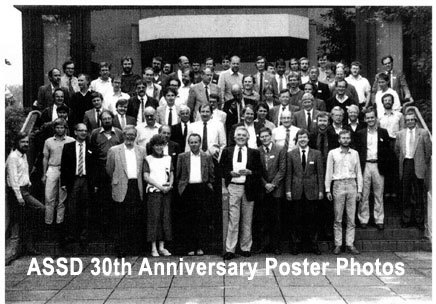
ASSD 30th Anniversary Poster Photos
Photos from AVS 68